Oneg Shabbat Archive Exhibition
Permanent Exhibition – Full Production
A permanent exhibition dedicated to the underground Oneg Shabbat archive in the Warsaw Ghetto.
8ND led the project end-to-end — interior architecture and spatial planning, immersive video installations, original score composition, projection mapping on a purpose-built object, film editing, graphic systems, and physical exhibit integration.
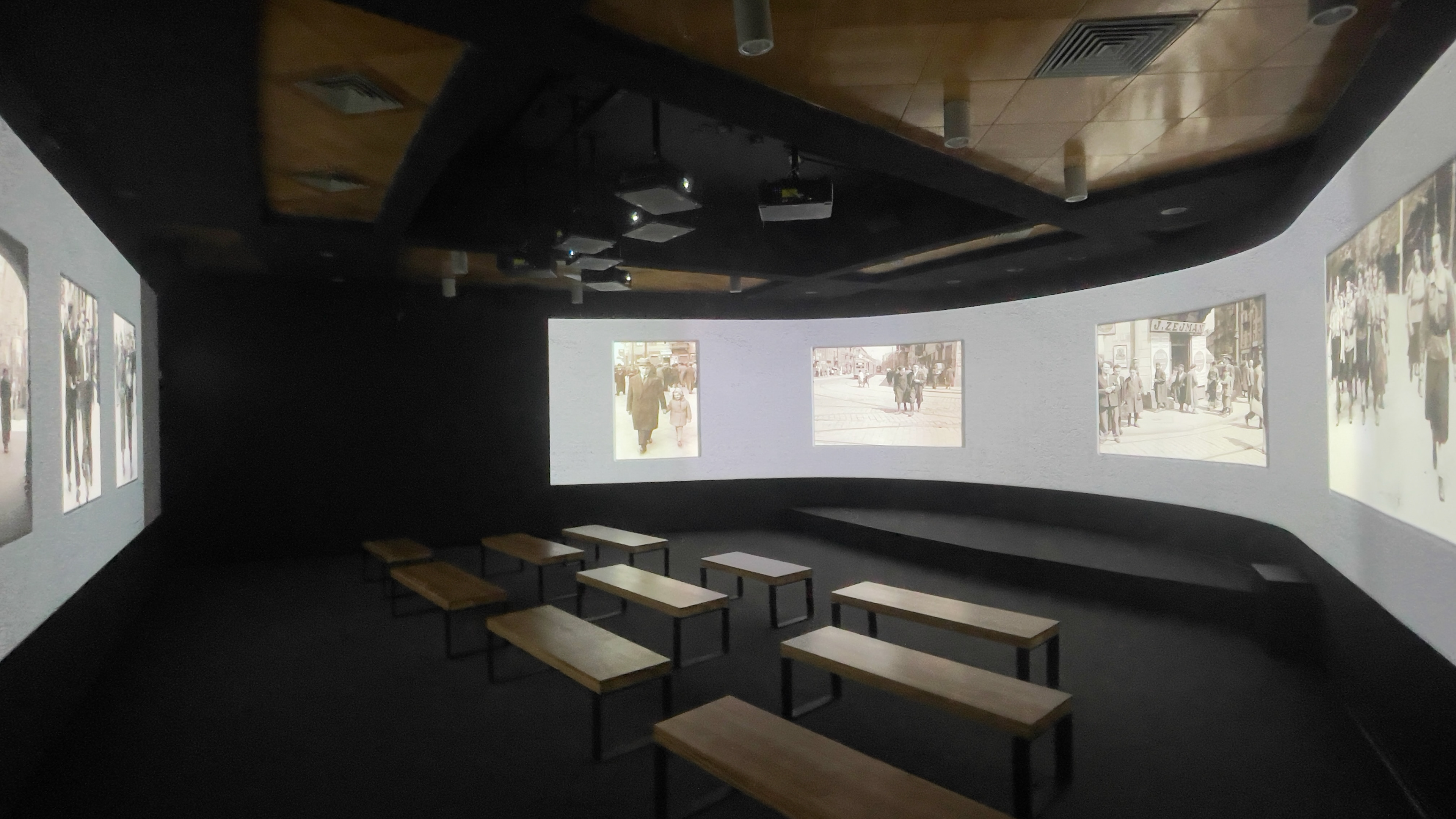
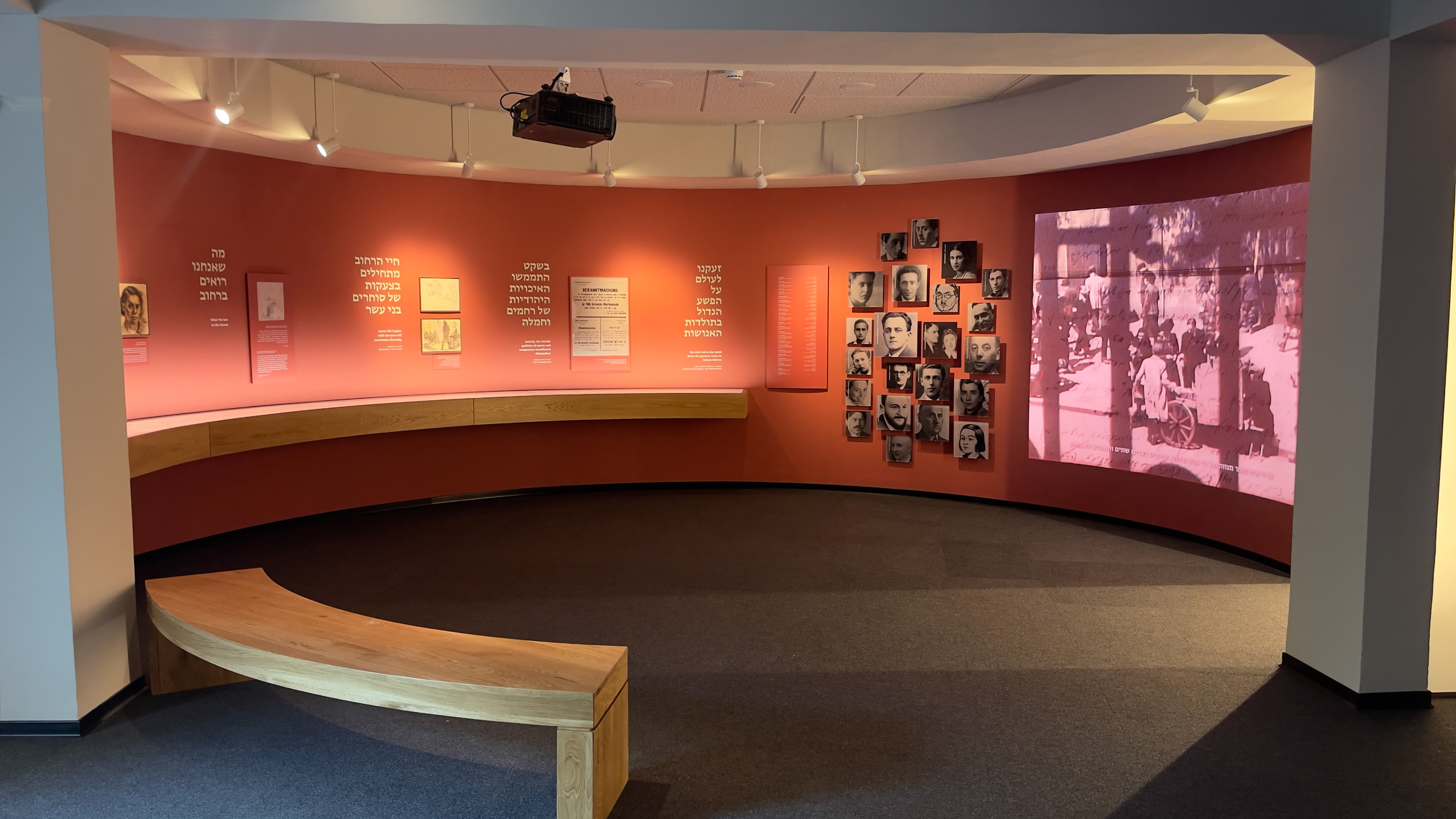
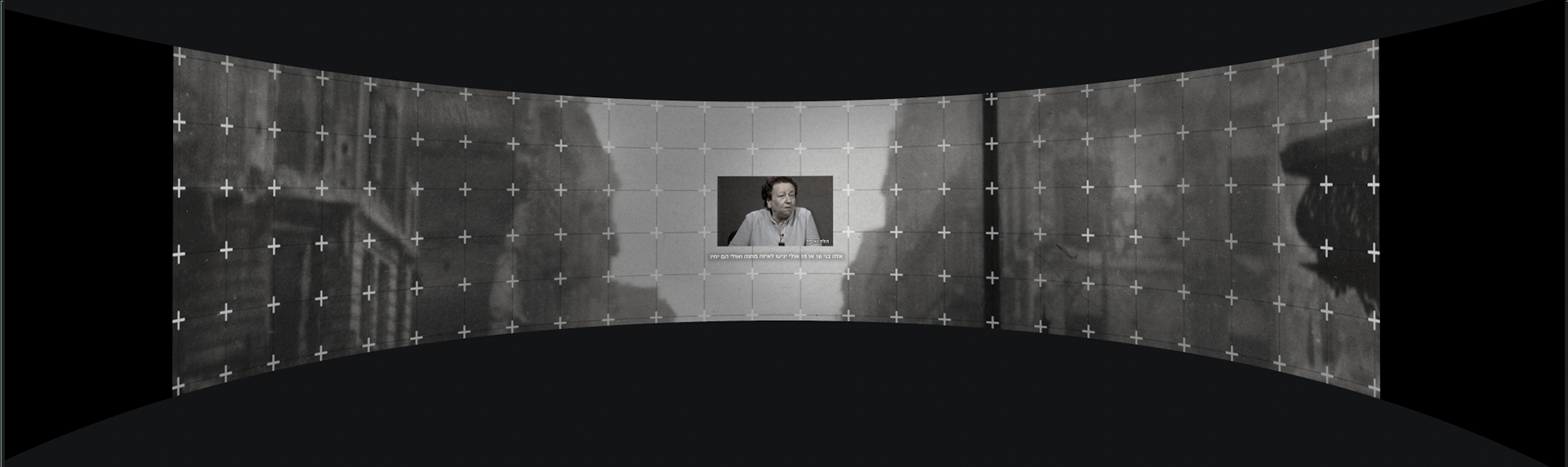
At the core of the exhibition stands a curved immersive environment presenting archival materials in a wordless spatial narrative. Surrounding it are additional installations, including a mapping piece responding to original texts and names drawn from the archive
Names
and personal testimonies such as the 1942 student composition describing daily life in the ghetto
street
.
The exhibition unfolds as a cohesive spatial experience — architecture, image, sound, and object forming a unified environment.
From concept to execution, the project was realized in full by 8ND.
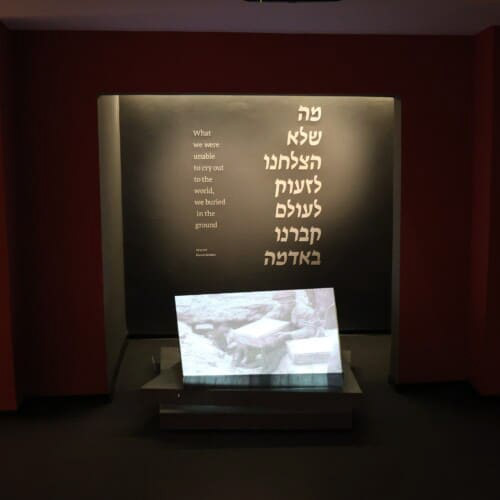
The Oneg Shabbat was an underground archive initiated and activated by Emanuel Ringelblum. Its goal was to document all aspects of life in the Warsaw ghetto for the outside world and for posterity. The Archive team, coming from different social, religious, and political backgrounds, put their lives in danger while assembling some 35,000 sheets of notes, diary entries, youth movements’ publications, essays, photos, drawings, and official documents reflecting everyday life. As people involved in the ghetto’s public activity, they became familiar with the horrific distress of those trapped in the ghetto. Until the deportations ensued, they documented manifestations of solidarity, mutual assistance, and efforts to keep routine life within the inferno. The Archive underground was operated until the ghetto uprising in April 1943. In the final stage, its staff focused on gathering information about the deportations and the extermination, documenting the Germans’ crimes to provide testimony for the criminals’ prosecution. Part of the archive was buried in the ground during the Great Deportation in August 1942; two additional parts were interred in January and April 1943. At the end of the war, two parts were uncovered; the third has not been found to this day. Of the sixty members of Oneg Shabbat, only three survived the Shoah.